

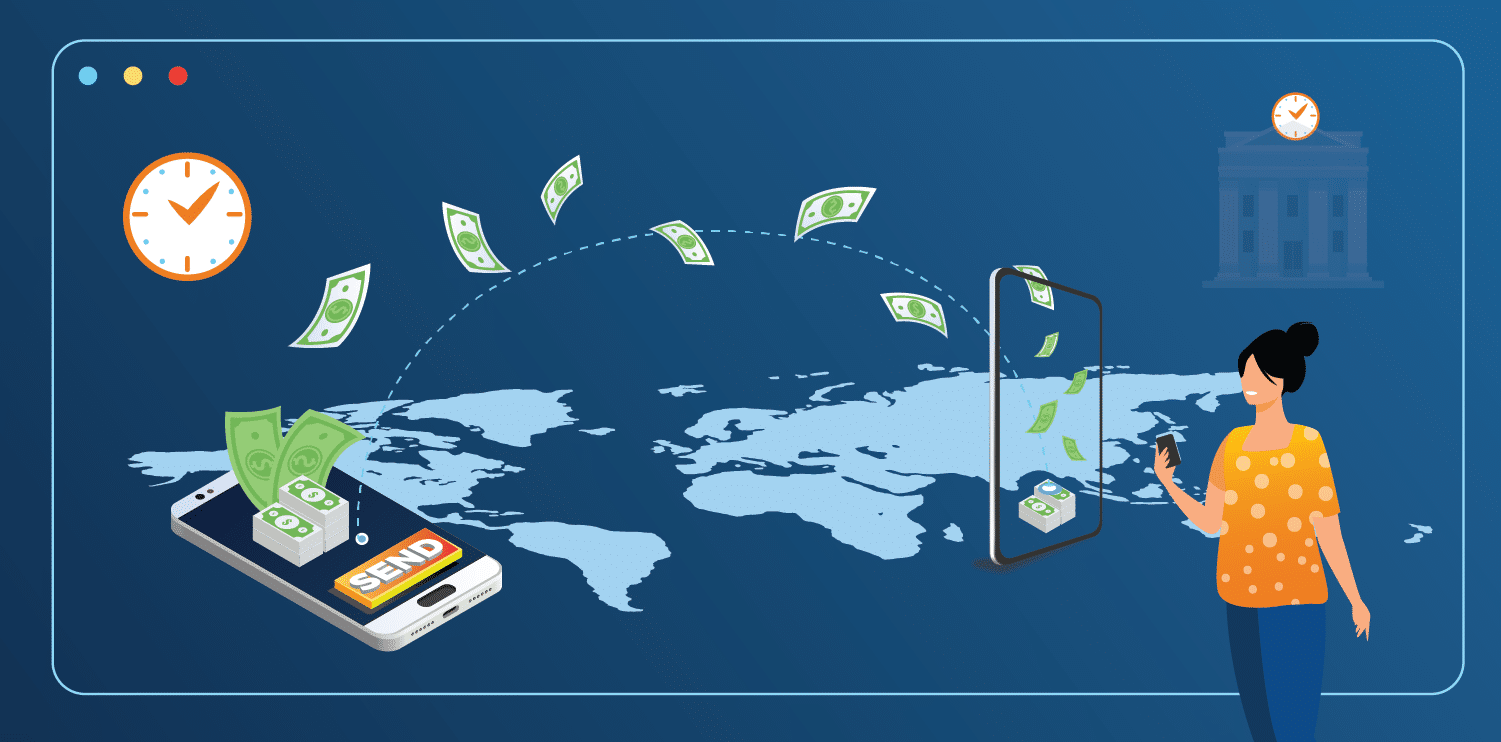
Receiving payments from overseas is a crucial aspect for many businesses and individuals in India. Whether it’s exporting goods, freelancing for global clients, or receiving support from family abroad, understanding the best methods for international payments is essential. Among the various options, international bank transfers stand out as a preferred choice. Known for their security, simplicity, and capacity to handle large sums, bank transfers ensure funds are deposited directly into your account while meeting all regulatory requirements. This makes them a trusted and efficient solution for cross-border transactions.
In this blog, we’ll explore how to receive international bank transfers in India, including key steps, considerations, and tips for ensuring a seamless experience.
Types of Bank Transfers
When it comes to receiving international payments in India, understanding the different types of bank transfers is essential. Each method has unique features, benefits, and ideal use cases. Here’s a breakdown of the most commonly used methods:
SWIFT Transfers
The SWIFT (Society for Worldwide Interbank Financial Telecommunication) network is the most widely used system for international bank transfers. It ensures secure and standardized communication between banks worldwide.
- How it works: The sender’s bank uses your account details, including your SWIFT/BIC code, to initiate the transfer. The SWIFT network ensures the funds are securely transmitted to your account through intermediary banks.
- Best suited for: SWIFT transfers are reliable and globally accepted, making them ideal for large transactions or payments from multiple international locations. However, they may involve processing fees and take up to 5 business days to complete.
Wire Transfers
Wire transfers are similar to SWIFT but are also commonly used for direct electronic bank-to-bank payments.
- How it works: The sender provides your account details, and the transfer is processed electronically. Wire transfers may use networks like SWIFT or direct bank connections to complete the payment.
- Best suited for: Wire transfers are faster than traditional methods like cheques and are excellent for significant transactions. While they are secure and efficient, they may come with additional fees depending on the intermediary banks involved.
Challenges of Traditional Bank Transfers
While traditional bank transfers remain a widely trusted method for receiving international payments, they are not without their drawbacks. Businesses and freelancers in India often face several challenges that can hinder smooth cross-border transactions. Here are the key pain points:
High Transaction Fees: The Costly Pain Point
One of the biggest downsides of traditional bank transfers is the cost. Multiple intermediary banks are often involved in transferring funds from the sender’s account to the recipient’s account in India. Each of these intermediaries may charge their own fees, including SWIFT processing fees and currency conversion charges, making the total transaction cost significantly high.
For businesses dealing with frequent payments, these costs can add up quickly, eating into their profit margins. Moreover, additional hidden charges, such as processing or administrative fees and the mandatory GST (Goods and Services Tax) on service fees, can further inflate the final cost.
How BRISKPE Helps:
BRISKPE eliminates unnecessary intermediaries by directly connecting with global payment networks. This reduces the number of hops in a transaction and minimizes transfer fees. The platform offers competitive FX rates and transparent service fees, helping users retain more of their earnings without worrying about hidden deductions or GST surprises.
Slow Settlement Times: More Days of Waiting
Another significant issue is the delay in settlement times. Traditional bank transfers, especially those made through the SWIFT network, can take anywhere from 2 to 5 business days to complete. In cases where multiple intermediaries are involved, the time can extend even further.
For businesses requiring immediate cash flow or freelancers awaiting payments for urgent expenses, such delays can cause unnecessary stress and operational challenges. The lack of real-time tracking further compounds this problem, leaving recipients uncertain about the exact status of their payments.
BRISKPE speeds up settlement by using optimized routing and digital payment rails, allowing most transfers to reach Indian accounts within 24 hours. This ensures faster access to funds, improving cash flow management and reducing the waiting period that traditional banking imposes.
Opaque Conversion Charges
This is perhaps the biggest hidden fee. Banks rarely offer the mid-market exchange rate (the one you see on Google). Instead, they apply a currency conversion spread or markup, typically adding 1.5% to 3% to the interbank rate. This difference is a cost absorbed by the recipient, resulting in a lower amount of Rupees credited to their account. Between the sender and the recipient, several entities may handle the transaction, and each step involves deductions, making it difficult to predict the final amount that will be credited.
BRISKPE provides transparent FX conversions with real-time rate visibility before every transaction. Users can see exactly how much will arrive in their account, eliminating uncertainty.
Lack of Transparency
Traditional bank transfers often lack transparency. Between the sender and the recipient, several entities may handle the transaction, and each step involves deductions and processing time. This makes it difficult to predict the final amount that will be credited, especially when currency conversion is involved.
BRISKPE offers complete end-to-end tracking. Every transaction includes live updates, from initiation to credit, ensuring both sender and receiver know exactly when the funds are processed and received. This transparency builds trust and reduces communication friction between global partners.
Limited Accessibility
Many traditional banking systems still rely on extensive paperwork and manual processes, making them less accessible for smaller businesses or individuals who may not have established banking relationships. This further complicates the process for freelancers or startups just starting to receive international payments.
BRISKPE’s platform simplifies onboarding with a fully digital process. Users can sign up, verify their accounts, and begin receiving global payments online, all without visiting a branch or dealing with excessive paperwork. It’s designed to make international payment infrastructure accessible to everyone, not just large enterprises.
Complex Compliance Documentation
Cross-border transfers to India are governed by strict FEMA (Foreign Exchange Management Act) and RBI guidelines to ensure that every inbound payment is legitimate and properly classified. When receiving funds through traditional banks, individuals and businesses must provide several compliance documents before the transfer can be processed and credited.
Key documents typically required include:
- Invoice or Contract Copy – proof of the underlying transaction or service provided.
- Purpose Code Declaration – mandatory RBI code specifying the nature of the remittance (e.g., freelance services, exports, consultancy).
- FIRA (Foreign Inward Remittance Advice) or Bank Advice – confirmation issued by the bank once funds are received.
- Softex Form – required for software and IT export transactions, filed with STPI or SEZ authorities.
- PAN and IEC (Import Export Code) – mandatory for businesses receiving export-related payments.
For freelancers, consultants, and small exporters juggling multiple international clients, this compliance overhead can slow down cash flow and add unnecessary complexity.
How Briskpe Simplifies Compliance
Briskpe automates and streamlines the entire compliance process. Users can upload invoices and declare the correct RBI purpose code directly within the platform. The system then automatically generates and stores FIRA for each payment, eliminating the need to chase banks for documentation. For IT service exporters, Briskpe also assists with Softex filing support, ensuring every remittance remains compliant with RBI and FEMA standards.
How Major Banks Handle International Transfers
While the core SWIFT process is standard, India’s major banks have their own fee structures and processes for inward international remittances. It is essential to know these differences to minimize costs and maximize the amount you receive.
How SBI Handles International Transfers
State Bank of India (SBI), as one of the largest public sector banks, offers international transfer services with its own set of charges.
- Inward Remittance Fee: SBI may charge a processing fee for inward remittances, such as approximately ₹250 for transfers via their Express Remit channel.
- Timeframe: SWIFT transfers generally take 2 to 5 business days, though their wide network can sometimes reduce correspondent bank fees for common corridors.
- Currency Conversion: Like all banks, SBI applies a margin to the interbank exchange rate, which is a key component of the total cost.
How HDFC Handles International Transfers
HDFC Bank is known for its strong digital platform and efficient processing for international transfers.
- Inward Remittance Fee: HDFC Bank typically does not charge an explicit inward remittance fee.
- Additional Charges: They charge for ancillary services, such as a fee for issuing a Foreign Inward Remittance Certificate (FIRC), which is approximately ₹200 plus applicable taxes.
- Timeframe: HDFC often aims to credit the amount within 72 hours (3 business days), subject to foreign bank processing.
- Currency Conversion: HDFC applies a currency conversion markup, which is the major hidden cost in the transaction.
How ICICI Handles International Transfers
ICICI Bank provides a robust suite of services for Non-Resident Indians (NRIs) and international payments, often highlighting their digital speed.
- Inward Remittance Fee: ICICI Bank generally levies zero charges for receiving an inward wire transfer, though ancillary charges may apply.
- Timeframe: Wire transfers are often processed within 1 to 2 working days once all instructions and funds are received, making them one of the faster options.
- Transparency: They offer real-time tracking of remittances and competitive rates for large-value transactions.
- Hidden Costs: The main cost lies in their currency conversion spread, which is a factor to consider when comparing the final credited amount.
How Axis Bank Handles International Transfers
Axis Bank is also a popular choice, particularly among small businesses and freelancers, due to its focus on a transparent process.
- Inward Remittance Fee: Axis Bank typically has no charge for receiving inward remittances.
- Timeframe: Transfers generally take 2 to 5 working days, similar to the standard SWIFT network timelines.
- Tracking: Axis Bank offers good tracking features for inbound remittances, which adds a layer of transparency for the recipient.
- Hidden Costs: As with other private banks, the primary cost is the exchange rate markup applied during currency conversion.
Conclusion
International bank transfers remain a bedrock of cross-border finance for Indian businesses and individuals. While they offer security and the capacity for large-value transactions, it is crucial to remain aware of the common pain points, namely the high cumulative fees from intermediary banks, the currency conversion markups, and the potential for multi-day settlement times. By understanding the processes and charges of major Indian banks like SBI, HDFC, ICICI, and Axis, you can better manage your expectations and financial planning to ensure a smoother and more cost-effective international payment experience.
BRISPE: Your New Advantage for Global Payments
Tired of watching bank fees and slow SWIFT transfers devour your international earnings? Indian freelancers and service providers finally have a better option: BRISKPE.
BRISKPE simplifies cross-border income by providing you with Global Virtual Accounts in currencies like USD, EUR, and GBP. Your international clients simply make a local transfer, bypassing expensive intermediary banks and hidden fees.
The benefits are clear:
- Speed: Payments settle in your Indian bank account in just T+1 working day.
- Transparency: You get the live interbank exchange rate with virtually zero FX markup.
- Compliance: Instant, free e-FIRA documents make GST and compliance easy.
| Transaction Value (or equivalent) | Fee per Transaction (Plus GST) |
| Up to $2,000 USD | Flat $16 |
| $2,000 to $10,000 USD | Flat $25 |
| Above $10,000 USD | 0.25% of the transaction value |
BRISKPE offers clear, flat-rate fees, ensuring you always know your exact earnings upfront. It’s the fastest, fairest, and most compliant way for Indian professionals to maximize their global income.